Skip to content
A patio can look great when it’s installed in the fall, only to develop cracks, uneven spots, or loose stones after a Massachusetts winter. Freeze-thaw cycles, snow, rain, and shifting soil can all take a toll on an outdoor surface, especially when the base underneath wasn’t prepared properly.
That’s why choosing patio materials involves more than finding a color or style you like. The material needs to suit your yard, handle New England weather, and fit the amount of maintenance you’re willing to take on.
Concrete pavers and natural stone are popular choices for Massachusetts patios because you can often adjust or replace individual units if the ground shifts. Poured concrete has a lower upfront cost, while flagstone offers a more natural look that works particularly well with traditional New England homes.
So, which patio material is best for your property? That is the question that has likely brought you here.
This guide compares concrete pavers, poured concrete, natural stone, and flagstone. We’ll cover costs, durability, maintenance needs, and design options to help you choose a patio that works for your home in Newton, Wellesley, Needham, Weston, or the surrounding MetroWest area.
How Massachusetts Winters Affect Patio Materials
Massachusetts winters can be tough on patios. Water seeps into small cracks and gaps, freezes when temperatures drop, and expands as it turns to ice. Repeated freezing and thawing can gradually damage the surface and the materials beneath it.
Ground movement is another concern. When moisture in the soil freezes, it can cause sections of the ground to rise, a process known as frost heave. As the ground thaws, those areas may settle again.
The result? Cracked concrete, uneven pavers, loose stones, or a patio that no longer drains properly. But thankfully, it does not have to be this way.
Why base preparation matters
The material you choose matters, but so does the work underneath it. A patio installed over poorly drained or inadequately compacted soil is more likely to develop problems, regardless of whether the surface is concrete, stone, or pavers.
A well-built patio generally needs:
- Proper excavation: The installer removes unsuitable soil and prepares the area for the base.
- A compacted stone base: Crushed stone provides support and helps water drain away from the patio.
- Correct grading: The finished surface should direct water away from the house and other areas where it could cause problems.
- Appropriate edge support: Pavers need secure edges to help prevent the surface from spreading or shifting.
- Materials suited to the climate: Products should be appropriate for outdoor use and repeated freeze-thaw exposure.
Base depth depends on soil conditions, drainage, the patio’s intended use, and the installation system. A contractor should assess these factors rather than rely on one standard depth for every property.
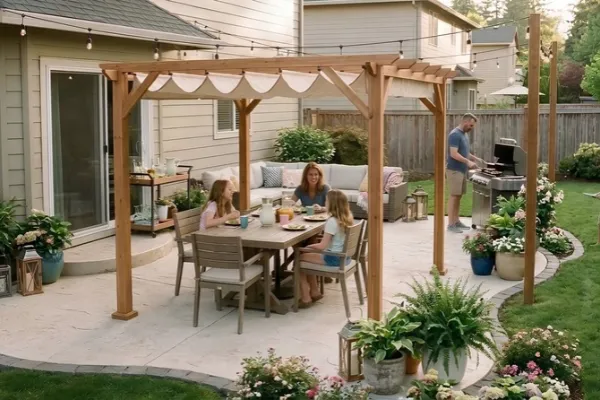
Concrete Pavers: A Practical Patio Materials Choice for Massachusetts Homes
Concrete pavers are a popular option for homeowners who want design flexibility without making repairs unnecessarily complicated. They come in a wide range of colors, shapes, sizes, and finishes, so they can suit everything from traditional colonials to contemporary homes.
When installed over a properly prepared base, concrete pavers can handle New England’s seasonal ground movement well. If a section settles or shifts, an installer can often lift the affected pavers, correct the base, and put them back in place.
That is a significant advantage over repairing a large, cracked concrete slab.
Durability and maintenance
Pavers aren’t immune to winter damage. Poor drainage, inadequate compaction, or loose edge restraints can lead to uneven surfaces. Joint sand may also need replenishing over time.
However, individual pavers are generally straightforward to replace, and small repairs don’t usually require rebuilding the entire patio.
For best results, choose pavers rated for the conditions they’ll face and have them installed with a base and joint system appropriate for the site.
Patio pavers design options
One reason pavers work so well is the variety of looks they offer.
- Traditional homes: Tumbled pavers and warm, muted colors complement colonial and craftsman-style architecture.
- Modern outdoor spaces: Large-format pavers and simple grid patterns create a cleaner, more contemporary appearance.
- Entertaining areas: Different paver colors or patterns can help define dining areas, walkways, and seating spaces.
- Water-management projects: Permeable pavers allow water to pass through specially designed joints into a prepared stone reservoir below. They may be worth considering where stormwater management is a concern, although they require the right design and maintenance.
The best patio paver design suits your home’s architecture and how you plan to use the space.
Typical installed cost: The original estimate for the Newton and MetroWest area is approximately 18–30 per square foot. The final price depends on the paver selected, excavation, access, drainage, and layout.
Poured Concrete: A Lower-Cost Option With Trade-Offs
A poured concrete patio is worth considering if you want a straightforward surface without the higher initial cost of many paver or natural stone installations. A basic broom-finish concrete patio provides a simple, functional space for outdoor dining, grilling, or relaxing. Decorative finishes can also create a more customized look.
The main consideration in Massachusetts is how the slab will handle seasonal ground movement and winter exposure. This is why choosing the highest quality patio materials is critical to getting the best season-long space.
How concrete holds up in winter
Because poured concrete forms one continuous surface, movement beneath the slab can cause cracks. Freeze-thaw cycles can also cause surface scaling, flaking, and pitting, especially when the concrete is poorly suited to the exposure, or water remains on the surface.
Deicing salts can make surface deterioration worse, so avoid treating a patio with products that aren’t appropriate for the concrete. Follow the manufacturer’s guidance for winter maintenance.
Control joints help manage where some cracking occurs, but they cannot guarantee that a slab won’t crack. Once significant damage develops, repairs can be difficult to blend with the original surface.
Stamped concrete has similar structural considerations. It can mimic stone or pavers, but matching the original color and pattern after repairs may be challenging.
When a concrete patio makes sense
Poured concrete can be a good choice when the budget is tight and the homeowner understands the maintenance trade-offs. A properly designed and installed slab can last for years, but its performance depends on the concrete mix, drainage, reinforcement where appropriate, joint placement, and site preparation.
A covered patio may receive less direct snow and rain, but a roof doesn’t eliminate freeze-thaw exposure or ground movement.
Typical installed cost: The original local estimate is approximately 8–14 per square foot for standard poured concrete. Decorative finishes, difficult access, grading, and additional preparation can increase the price.

Natural Stone: A Long-Lasting, Distinctive Finish
Natural stone brings texture and variation that manufactured materials can’t completely reproduce. Bluestone, granite, and other suitable outdoor stones are common options for homeowners who want a patio with a more substantial, timeless appearance.
Stone can work beautifully with New England architecture and established landscaping. It also offers a range of finishes, from clean, uniform layouts to more irregular patterns.
Bluestone and granite
Bluestone is a familiar choice for patios throughout Massachusetts. You can install it in irregular shapes for a relaxed, natural look or in cut rectangles for a more formal design. Its performance depends on the particular stone, its thickness and finish, and how it is installed.
Granite is exceptionally hard and is often used for steps, borders, pavers, and accent features. Its texture and color can provide a striking contrast with bluestone or concrete pavers.
Whichever patio stone you choose, make sure it’s suitable for outdoor use in a freeze-thaw climate. Stone varieties differ in their porosity, strength, and resistance to weathering.
Natural stone maintenance
Natural stone isn’t necessarily maintenance-free. Some varieties benefit from sealing, while others may not need it. The right approach depends on the stone and the finish, so follow the supplier’s recommendations.
You may also need to address joint erosion, shifting stones, mineral deposits, or organic growth. Keeping the patio clean and ensuring proper drainage can help maintain its appearance.
Typical installed cost: The original MetroWest estimate is approximately 25–45 per square foot, depending on the stone, thickness, installation method, and site conditions.
Natural stone costs more than many basic concrete options, but its appearance and repairability can make it worthwhile for homeowners who plan to keep their patio for many years.
Flagstone: Natural Character for Traditional New England Homes
Flagstone isn’t a single type of stone. The term describes flat pieces of natural stone used for paving, often arranged in an irregular pattern. Depending on the product, flagstone may be made from bluestone, sandstone, slate, or other suitable varieties.
Its appeal comes from the variation between pieces. Rather than creating a perfectly uniform surface, flagstone gives a patio a more organic look that blends naturally with gardens, stone walls, and mature landscaping.
Sand-set or mortared flagstone?
Flagstone can be installed using different methods, and the choice affects how it performs over time.
Sand-set flagstone is laid over a prepared base, with joints filled using an appropriate material. Because the stones are separate units, you can often lift and reset sections if movement occurs.
Mortared flagstone is bonded to a rigid base. If the base cracks or moves, the mortar joints and stones can be affected too. Repairs may be more involved, particularly in areas exposed to repeated freeze-thaw cycles.
Neither method is automatically right for every site. Soil conditions, drainage, the stone selected, and the intended use should guide the installation approach.
Flagstone patio ideas
Flagstone offers plenty of design possibilities:
- A garden-inspired patio: Irregular bluestone with planted joints can soften the transition between a patio and surrounding gardens.
- A more formal layout: Cut stone with consistent dimensions creates a tidier, more structured appearance.
- A patio with a fire pit: Combine flagstone paving with a complementary stone fire pit and defined seating area.
- A connected outdoor space: Use matching stone for the patio, garden paths, and steps to create a consistent look.
- A traditional New England setting: Pair flagstone with fieldstone walls, established planting beds, and simple outdoor furniture.
For planted joints, choose plants that can tolerate the site’s sun, moisture, foot traffic, and joint depth. Creeping thyme may work in suitable locations, but it isn’t ideal for every patio.
Typical installed cost: The original MetroWest estimate is approximately 22–40 per square foot. Stone selection, cutting, joint treatment, and installation complexity all affect the final price.

Comparing Patio Materials and Long-Term Value
The cheapest patio to install isn’t always the cheapest to maintain. At the same time, a more expensive material doesn’t automatically guarantee a longer service life. Installation quality, drainage, product selection, and upkeep all influence how a patio performs.
Here’s how the four options compare.
| Material | Typical installed cost per sq. ft. | Main advantages | Main considerations |
| Poured concrete | 8–14 | Lower upfront cost, simple finish, easy to customize with decorative treatments | Can crack or develop surface damage; repairs may be noticeable |
| Concrete pavers | 18–30 | Wide design selection, individual units can be reset or replaced | Requires a well-compacted base, secure edges, and joint maintenance |
| Natural stone | 25–45 | Distinctive appearance, durable stone options, timeless design | Higher upfront cost; maintenance varies by stone |
| Flagstone | 22–40 | Natural patterns, suits garden settings and traditional homes | Irregular surfaces and joints require thoughtful installation |
These are the original draft’s estimated local price ranges, not verified current quotes. Actual prices can vary significantly by contractor, materials, site access, excavation, drainage, and project scope.
What might a 20-by-20-foot patio cost?
A 20-by-20-foot patio covers 400 square feet. Using the estimates above, the approximate installation costs would be:
| Material | Estimated total for 400 sq. ft. |
| Poured concrete | 3,200–5,600 |
| Concrete pavers | 7,200–12,000 |
| Natural stone | 10,000–18,000 |
| Flagstone | 8,800–16,000 |
These are planning figures based on the stated per-square-foot ranges, not contractor quotes. The natural stone estimate uses the 25–45 range; flagstone uses 22–40. Site preparation, drainage improvements, retaining walls, steps, and other features may add to the total.
Which material offers the best long-term value?
That depends on what you value most.
Poured concrete is attractive when keeping initial costs down is the priority. Concrete pavers offer a useful balance of design flexibility and repairability. Natural stone and flagstone appeal to homeowners who want a distinctive finish and are comfortable with a larger initial investment.
Rather than assuming one material will always be cheaper over 20 years, ask contractors about expected maintenance, likely repairs, and the cost of replacing damaged sections. Those details provide a more useful comparison for your property.
A well-designed patio can also improve how you use your outdoor space and how it looks alongside the house. Its effect on resale value depends on the property, local market, project quality, and buyer preferences, so avoid treating a particular return on investment as guaranteed.

How to Choose Between the Right Patio Materials for Your Property
Once you’ve narrowed down your options, consider the conditions in your yard as well as the look you’re trying to achieve.
Match the material to your home’s style.
Traditional colonials, Tudor homes, and older properties often pair well with bluestone, flagstone, or textured concrete pavers. These materials can complement established gardens and masonry features without making the patio feel out of place.
For contemporary homes, large-format pavers, cut bluestone, and simpler layouts can create a clean transition between indoor and outdoor living areas.
There’s no need to follow a strict rule. The goal is to choose a material and layout that feel connected to the architecture and landscaping.
Consider drainage, slope, and tree roots.
Some yards need more preparation than others. A sloped property may require grading, steps, retaining walls, or additional drainage work. Poorly drained soil can affect the performance of any patio material.
Large tree roots also deserve attention. Pavers and sand-set stone can sometimes be lifted and adjusted if roots cause movement, although serious root conflicts may require a more involved solution. A flexible surface doesn’t remove the need to protect the tree and maintain a stable patio.
Permeable pavers may help manage runoff in suitable locations, but they need a properly designed base and may not suit every soil or drainage condition.
Think about maintenance and everyday use.
Ask yourself a few practical questions before making a decision:
- Will you use the patio mainly for dining, entertaining, or relaxing?
- Do you want a uniform surface or the natural variation of stone?
- Are you comfortable periodically maintaining joints or sealing certain materials?
- Will the patio need to connect to steps, walkways, a fire pit, or an outdoor kitchen?
- Is your priority the lowest initial cost, easier repairs, or a particular look?
These answers can help narrow the choices before you start comparing individual products.
Get the installation plan before choosing the finish
Two patios made from the same material can perform very differently if one has better drainage and base preparation.
Before hiring a contractor, ask how they’ll handle the existing soil, what base system they’ll use, how water will drain, and how they’ll secure the edges and joints. Ask which products are suitable for local winter conditions and what maintenance they require.
A detailed installation plan is just as important as the material sample.
Conclusion: Which Patio Material Is Best for Massachusetts?
For many Massachusetts homeowners, concrete pavers and suitable natural stone are strong options because they offer attractive finishes and allow for localized repairs when individual units shift or become damaged.
Poured concrete is worth considering if upfront cost is the priority, provided you understand the potential for cracking and the difficulty of matching some repairs. Flagstone is a good fit when you want a more natural, distinctive patio that complements traditional architecture and garden landscaping.
The right choice comes down to your budget, your yard conditions, your preferred style, and how you plan to use the space. In a climate with repeated freeze-thaw cycles, proper excavation, drainage, and base preparation deserve just as much attention as the surface material.
At Newton Deck Builders, we help homeowners in Newton, Needham, Wellesley, Weston, and Brookline plan outdoor spaces around their homes, landscaping, and practical needs. No matter the scale or design elements, we can help you find the best patio materials for the local area.
If you’re considering a new patio, contact Newton Deck Builders to discuss your project and arrange a design consultation. You can also explore our patio and hardscaping services to see how a professionally planned outdoor space could work for your property.

Frequently Asked Questions
What is the best patio material for Massachusetts homeowners?
Concrete pavers and suitable natural stone are popular choices for Massachusetts because individual units can often be adjusted or replaced if the ground shifts. Poured concrete costs less upfront but can be harder to repair when cracks develop. Whichever material you choose, proper drainage, base preparation, and products rated for freeze-thaw conditions are essential.
How much should a 20-by-20 patio cost in Newton, Massachusetts?
A 20-by-20-foot patio covers 400 square feet. Based on the estimates in this guide, poured concrete may cost 3,200–$ 5,600, concrete pavers 7,200–$ 12,000, flagstone 8,800–$ 16,000, and natural stone 10,000–$ 18,000. These are planning estimates, not current quotes. Site access, excavation, drainage, and material selection can change the final price.
Is it cheaper to install concrete or pavers for a patio in Massachusetts?
Poured concrete generally costs less to install than concrete pavers. However, the long-term cost depends on how each patio performs, the quality of installation, and the repairs it needs. Concrete can be difficult to match after cracking, while individual pavers can often be lifted and reset. Compare the installation plan, expected maintenance, and initial price.
What materials are needed to build a patio in Massachusetts?
Most patio projects require excavation, a properly compacted base, suitable surface materials, and grading that directs water away from the house. Paver and some stone installations also need a setting bed, joint material, and edge restraints. Poured concrete requires an appropriate mix and joint layout, with reinforcement where specified. The exact materials and base depth depend on soil, drainage, site conditions, and the installation method.
What are the best flagstone patio ideas for traditional homes in Newton and MetroWest?
Irregular bluestone flagstone works well with traditional homes, established gardens, and fieldstone walls. For a more formal look, choose cut stone arranged in a consistent pattern. You can also connect the patio to garden paths, outdoor steps, or a stone fire pit to create a coordinated outdoor space. Choose joint treatments and stone finishes based on drainage, maintenance needs, and how you’ll use the patio.